When Your Floors Are Running the Room
Some finishes don't ask for your opinion. They just take over.
Existing floors — especially older stained hardwood — have a way of dictating every decision that follows. The cabinet color, the wall paint, the hardware finish. If you don’t address them intentionally, they’ll make every choice for you, and not always in a way you’ll love once the dust settles.
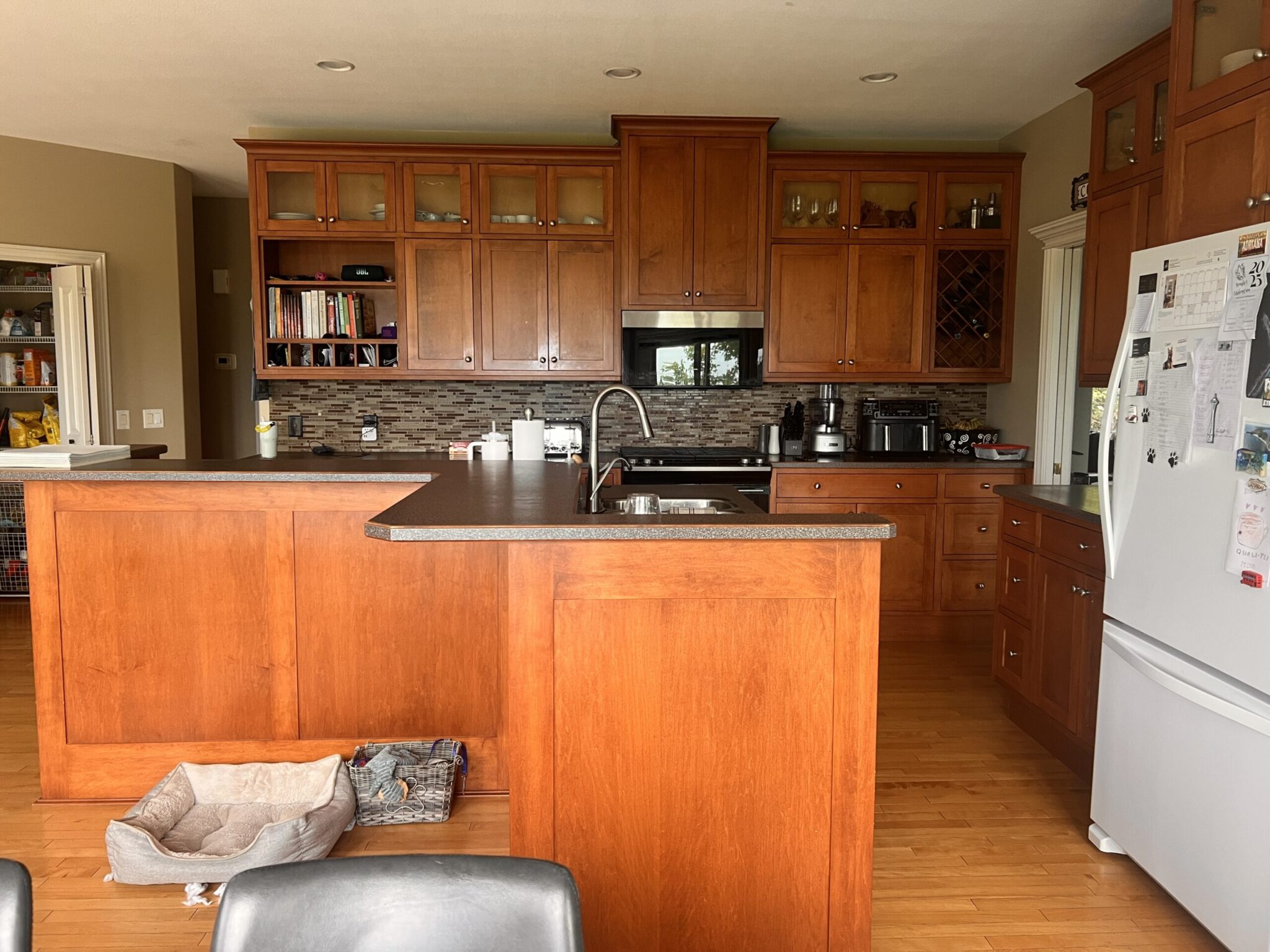
The bossy floor problem
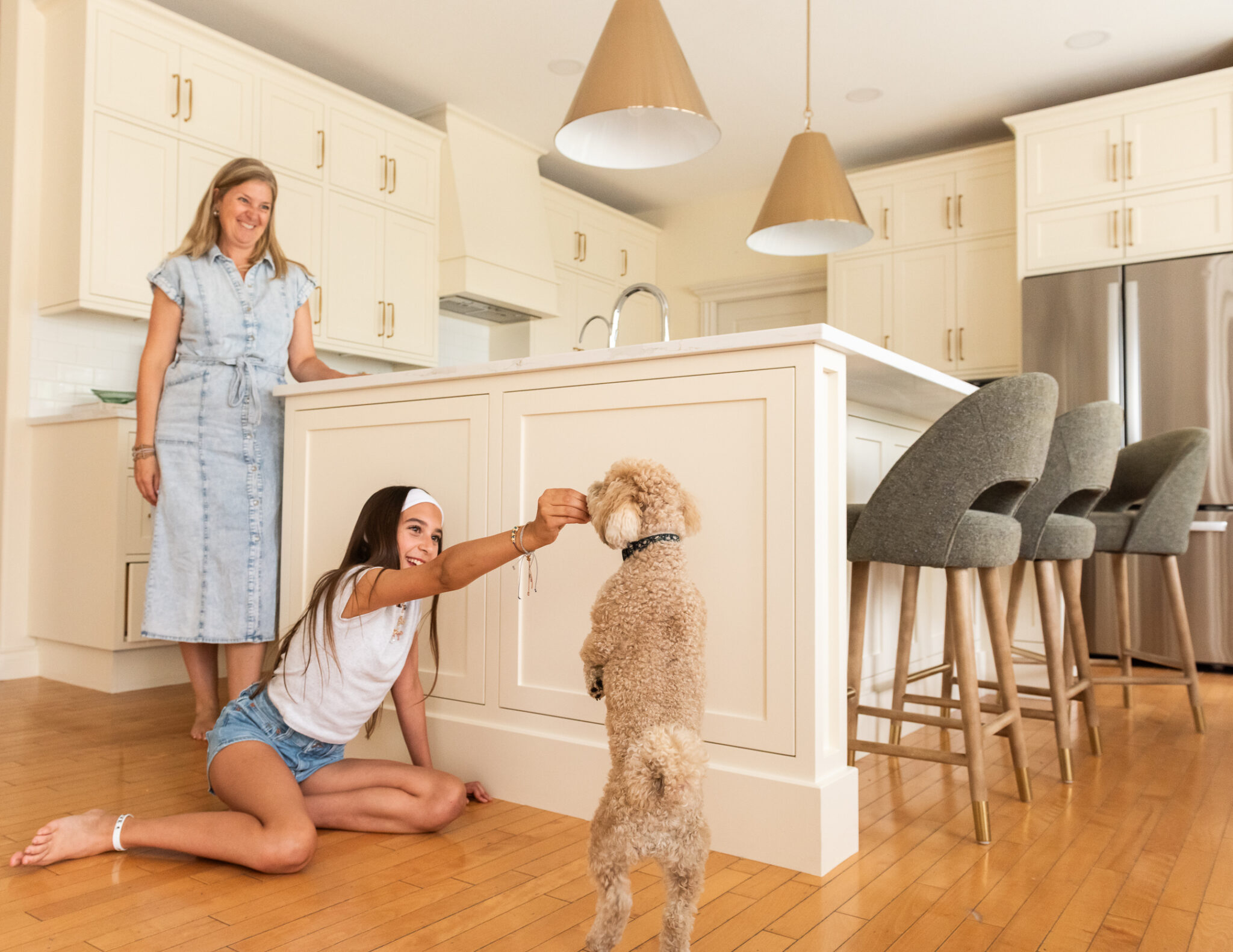
On this project, we were working around original two-inch matchstick hardwood floors with a warm, orange-toned stain. The client wanted them gone. And honestly? We get it. The early 2000s left a lot of us with complicated feelings about honey oak and warm-toned wood.
But here’s what designers can do that’s hard to do on your own — we can see a little further down the road. Warm woods are trending back. And a two-inch matchstick floor? That’s charming. That’s timeless. That’s workable.
So we kept the floors. And then we got to work.
Choosing the right white
The client wanted a white kitchen. With orange-toned floors, that’s where most people panic — and where most mistakes get made.
“I’m not flipping to Chantilly Lace or White Dove when a client asks me for a white kitchen with these orange floors. I’m going to the beiges — the orange beiges — because if that white has a little bit of orange in it, then it’s not calling out the orange in the floor. Instead, everybody’s playing the same game. Very harmonious.”
What not to do
Here’s where most people go wrong. When faced with a warm, orange-toned floor, the instinct is to balance it — to reach for something cool and crisp to counteract the warmth. A stark bright white. A grey-toned cabinet. A blue-based paint.
Don’t do this.
Introducing cool tones into a space with warm floors doesn’t neutralize the warmth — it exaggerates it. Suddenly the floor becomes the loudest thing in the room because everything around it is pulling in the opposite direction. You’ve essentially put a spotlight on the very thing you were trying to downplay.
The counter-intuitive truth is that warm disguises warm. When your floors, your paint, your cabinets, and your hardware are all drawing from the same warm family, they stop competing and start blending. The floor doesn’t disappear exactly — but it stops announcing itself. It just becomes part of a cohesive, harmonious whole.
That’s the goal. Not contrast. Cohesion.
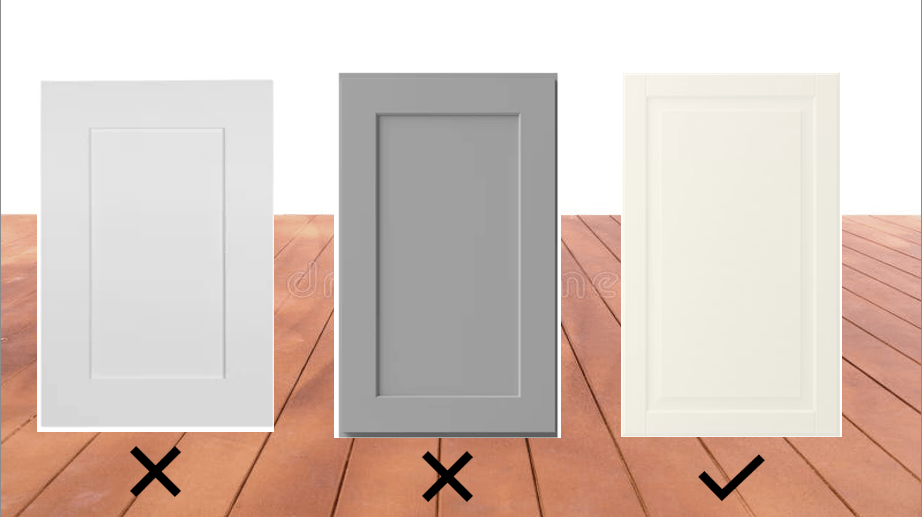
Finding the Right Undertone
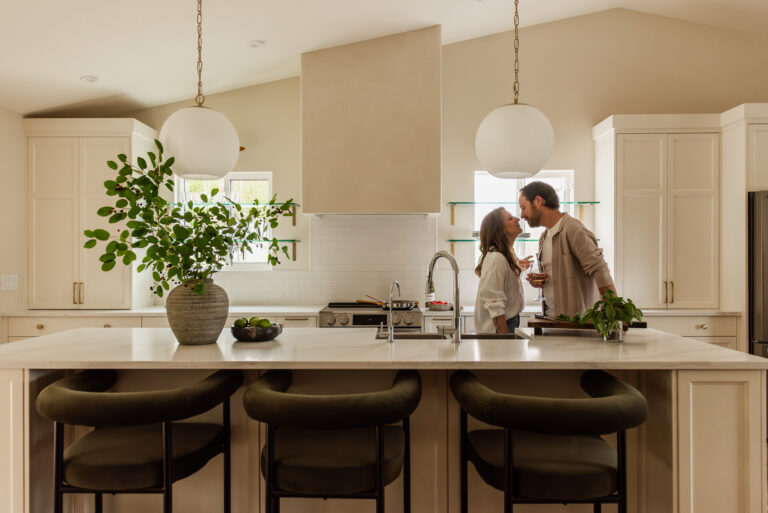
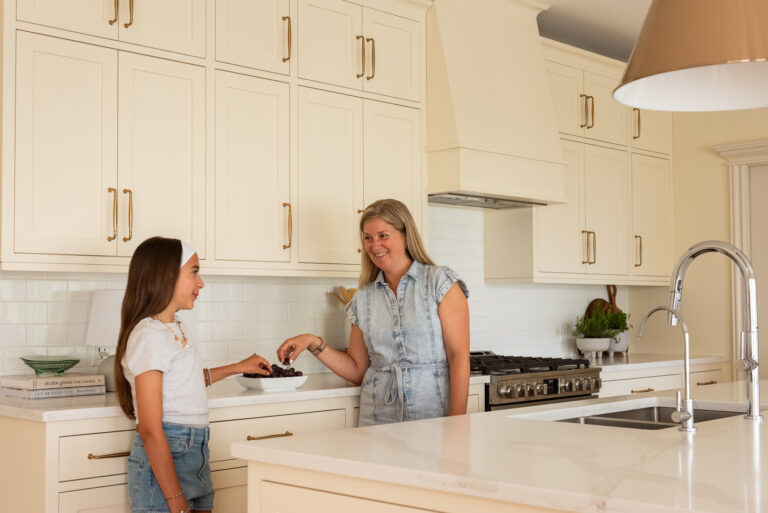
There are five different undertones in beige. The move here was finding the very lightest of the orange undertones — a complex cream that doesn’t fight the floor, it joins it. The result is a white kitchen that reads sophisticated, historical, and completely intentional. Pair it with brass accents and the whole room sings.
What this means for your renovation
If you’re approaching a project with an existing finish that feels like it’s running the room, the worst thing you can do is ignore it and hope it works out. It won’t. You’ll finish the project, invest the money, and suddenly you can’t unsee it.
The right white, the right stain, the right undertone — these aren’t guesses. They’re decisions that require someone trained to read how finishes speak to each other and what happens when they don’t.
That’s exactly what we’re here for.
Follow the Build
We’re sharing the process, the missteps, and the decisions behind every detail at Vinecrest. More stories coming soon.
Want to read more about this project (and see all the incredible before and afters?) Click here.
More questions? Head to our FAQ page linked here.
Want more like this post? Click on one of the posts below:
→ Project Reveal with 4 Tips on Timeless Design for your Next Reno!
→ Tips for Making Long Lasting Decisions in your Renovation
→ When Good Bones Meet a Bad Island: The Vinecrest Kitchen Transformation
Want to get started on your own project? Book a Discovery Call below today.