
Designing for Sound: Why Acoustics Matter More Than You Think

Good design doesn’t stop at what a space looks like. It considers all five senses, and sound is one that’s often overlooked until it becomes a problem.
In this home, the clients were already experiencing significant echo issues before we touched a single wall. With 12′ ceilings and a fairly open layout, sound was bouncing and carrying in ways that made everyday living uncomfortable. And because our design plan included removing two additional walls to create a more open, connected space, we knew those sound issues would only be amplified.
So from the very beginning, acoustics became part of the design conversation, not an afterthought.
Rather than relying on a single fix, we approached the issue in layers. Here’s how we addressed sound thoughtfully, without compromising the aesthetic.


1. Coffered Ceilings That Do More Than Look Beautiful
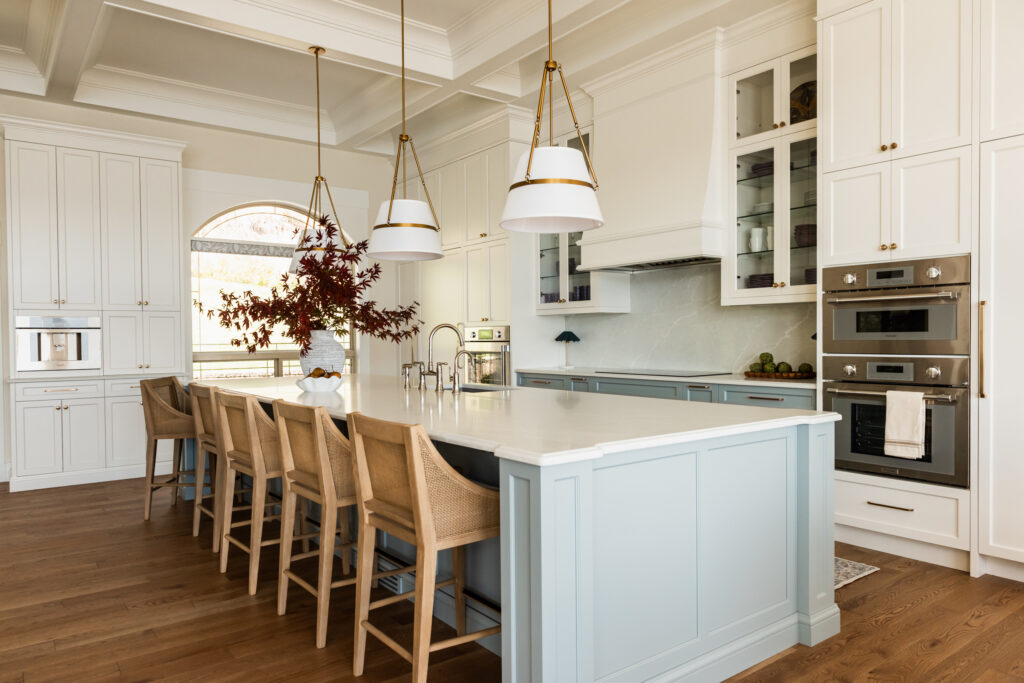
Coffered ceilings are often chosen for their architectural impact, and in this space, they absolutely deliver. But they also play a critical functional role.
By breaking up the ceiling plane, the coffers interrupt sound waves as they travel across the room. Instead of echoing freely from one end of the space to the other, sound is softened and diffused. It’s a subtle intervention, but incredibly effective, and it adds depth, warmth, and character at the same time.

2. Custom Acoustic Panels That Read as Art
When people hear “acoustic panels,” they often picture stick-on foam tiles in the shape of a honeycomb that feel more studio than home. That wasn’t going to work here.
Instead, we designed and custom built acoustic panels that feel intentional and elevated. These are oak box frames filled with acoustic material, overlaid with beautiful designer fabric, and laid out in a repeating pattern across the wall. The result feels more like an art installation than a sound solution, but it’s doing a lot of heavy lifting behind the scenes.
This is one of those moments where function and beauty truly overlap.

3. Swapping Tile for Hardwood Flooring
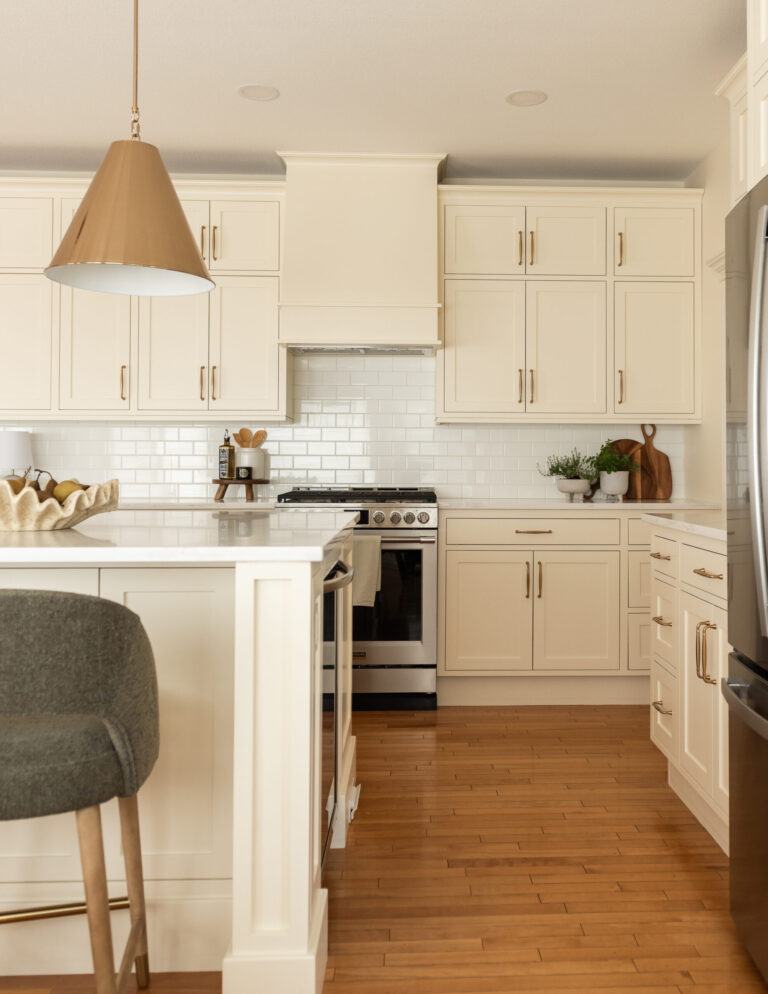
Originally, the kitchen was finished with tile, which tends to reflect sound rather than absorb it. As part of the renovation, we replaced the tile with hardwood flooring throughout the open-concept space.
Hardwood is more porous, which helps absorb and soften sound. When used across a large footprint, it significantly reduces echo and creates a warmer, more comfortable acoustic experience, especially in a space where the kitchen, dining, and living areas all connect.

4. The Easiest Way to Improve Sound Issues - Using the Largest Rugs Possible
Rugs might seem obvious when it comes to sound control, but size matters more than most people realize. Too often, rugs are undersized, which limits their effectiveness both visually and acoustically.
In this home, we sized the living room rug as large as the space would allow (12’x15′). We added a five-by-seven rug in the entry and a twelve-foot runner through the kitchen. These soft surfaces absorb sound, reduce reverberation, and help ground each zone within the open layout.
For more on area rugs, be sure to check out this blog post!
Designer Tip: If you’re using anything less than a 8’x10′ rug in your living room, I can all but guarantee you, it’s not big enough!

The Power of Layered Design
None of these choices alone would have solved the issue entirely. But layered together, they transformed how the space feels to live in. The echo is reduced, conversations are easier, and the home feels calmer and more comfortable without sacrificing openness or design integrity.
Thoughtful design isn’t just about finishes and floor plans. It’s about how a space functions, how it feels, and how it supports everyday life. When you open up a home, acoustics deserve a seat at the table, right alongside layout and materials.
Because a beautiful space should sound as good as it looks!
💬 FAQ: Acoustics in Open Concept Spaces
Q: Why do open-concept homes often struggle with echo?
A: Open layouts typically have fewer walls, higher ceilings, and harder surfaces, which allow sound to travel farther and bounce more easily. Without enough elements to absorb or interrupt sound, everyday noise can quickly become overwhelming.
Q: Why is it important to address acoustics early in the design process?
A: When sound is considered early, solutions can be built directly into the architecture, flooring, and furnishings. This results in a space that feels intentional and comfortable, rather than one that needs corrective fixes after the fact.
Q: Do acoustic solutions have to look utilitarian or commercial?
A: Not at all. Acoustic treatments can be fully integrated into the design through custom panels, millwork, and architectural features that function beautifully while quietly improving sound quality.
Q: Do rugs and flooring really impact how a space sounds?
A: Yes. Porous materials like hardwood flooring and generously sized rugs help absorb sound and reduce echo, especially in large, open-concept spaces.
Want to read more about this project (and see all the incredible before and afters?) Click here.
More questions? Head to our FAQ page linked here.
Want more like this post? Click on one of the posts below:
→ Behind the Build: No Bulkheads! How Smart Planning Keeps Ceilings Clean and Spaces Beautiful — why coordinating mechanicals early protects ceiling height, sightlines, and architectural intent
→ A Case for Closed Kitchens — how layout choices impact sound, calm, and daily livability in ways open concept doesn’t always solve
→ Project Reveal with 4 Tips on Timeless Design for your Next Reno! — how proportion, restraint, and thoughtful planning create spaces that feel good long after trends pass
Want to get started on your own project? Book a Discovery Call below today.
Still hungry? Here’s more