Sugi House, A Calm, Thoughtful Remodel Rooted in Everyday Function
Some homes do not need to be reinvented. They need to be edited.
Sugi House takes its name from sugi, the Japanese word for Japanese cedar, a material long associated with warmth, longevity, and quiet beauty. Often used in traditional architecture and modern Japandi design, sugi represents an approach to building that values restraint, natural materials, and thoughtful craftsmanship over excess.
That philosophy became the guiding principle for this renovation, not a dramatic overhaul, but a series of intentional, well-edited changes designed to make everyday life feel calmer, more functional, and more beautiful, all while working within a carefully managed budget.
BEFORE
AFTER - same tile!
Starting with What Already Worked
One of the guiding principles of this project was knowing what not to change.
Across the home, we intentionally preserved elements that were still functional and visually serviceable, including flooring in the mud hall, laundry room, and basement bathroom, as well as the ensuite quartz, vanity boxes and sink faucet. By holding onto these foundations, we were able to redirect the budget toward custom millwork, improved materiality, and details that genuinely elevated how the home functions.
Design tip: If your flooring is neutral and in good condition, you may opt to keep it. You can transform a space dramatically through cabinetry, lighting, and paint without touching the floors.
BEFORE
The Kitchen’s Best Party Trick
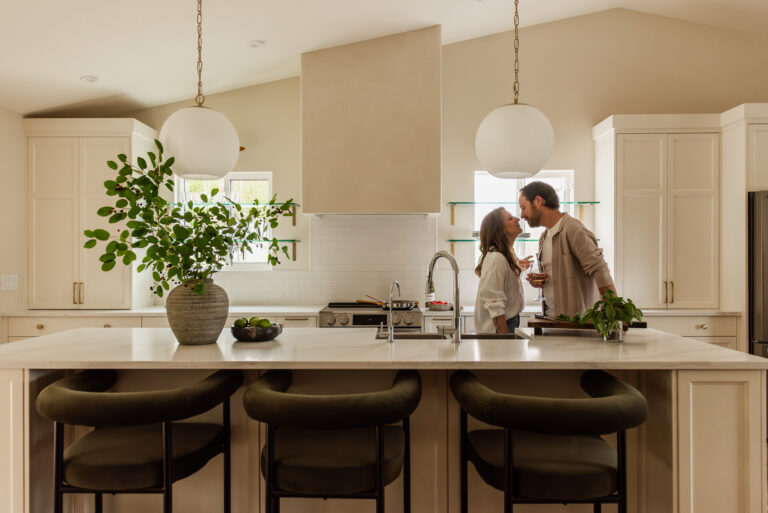
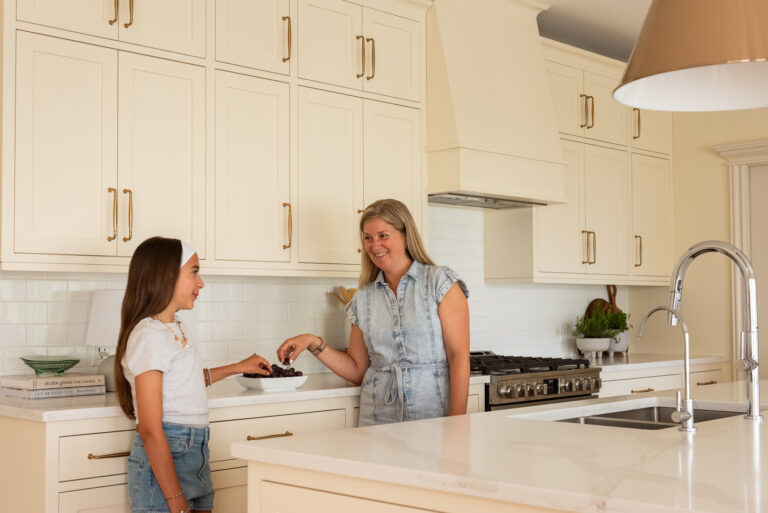
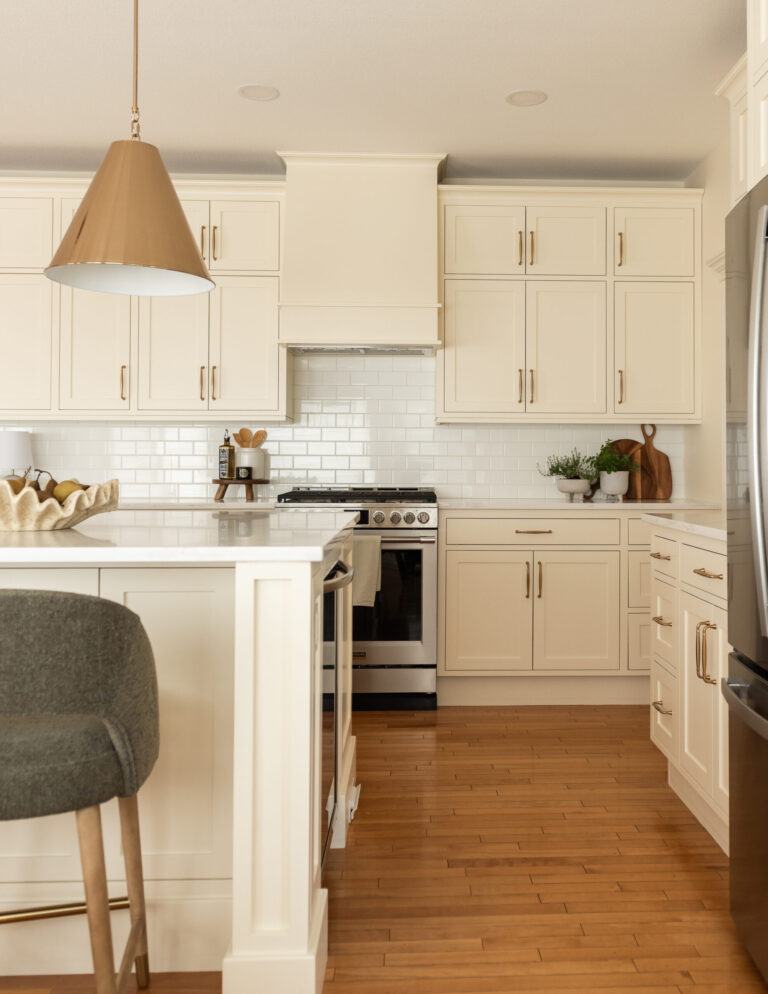
In the kitchen, the cabinetry refresh was already complete when we arrived, but one detail stood out immediately, a classic 90s niche hovering above the stairwell.
Instead of ignoring it, we turned it into a feature.
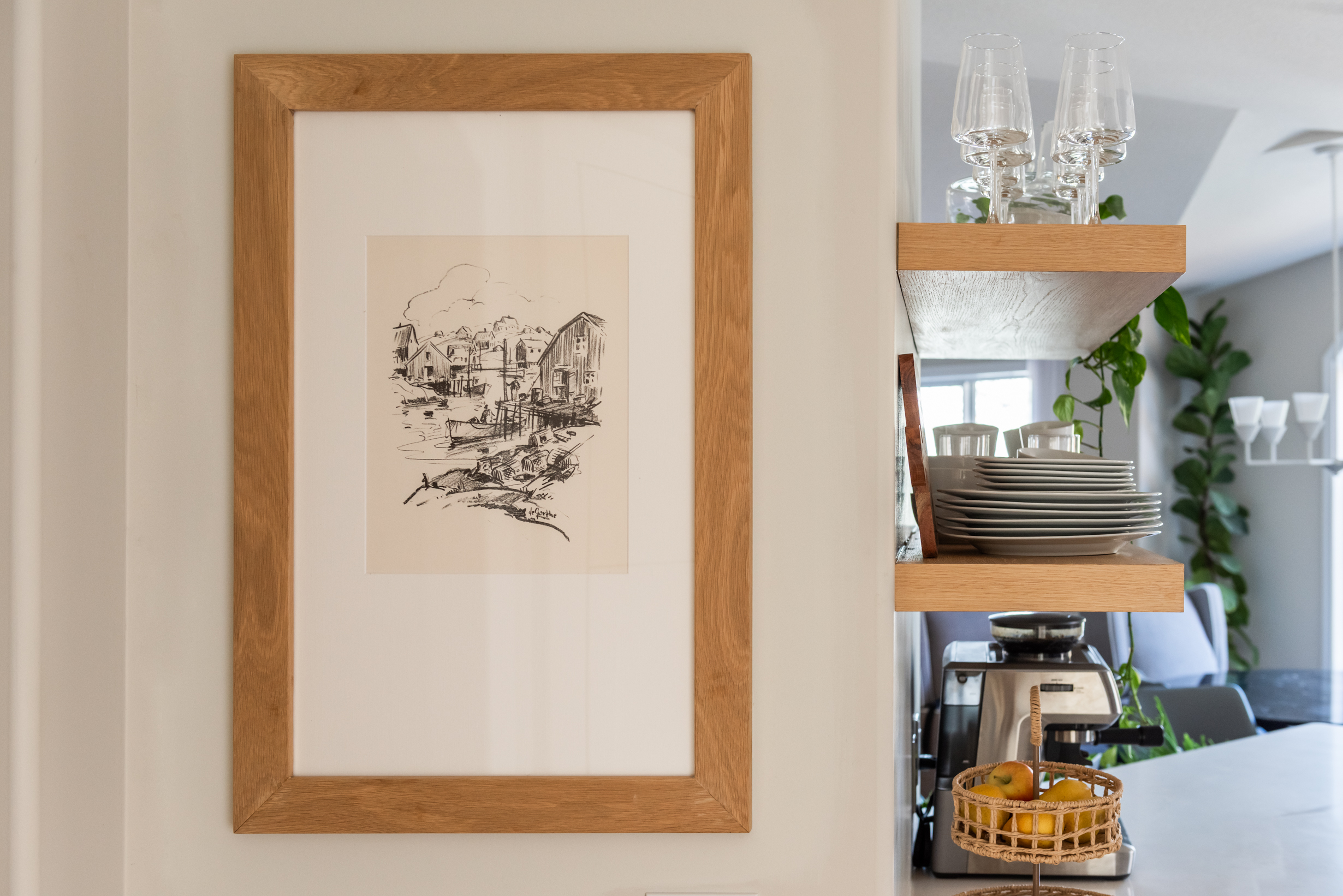
From the stairwell side, the niche was filled in entirely, creating a clean wall plane that now provides the backdrop for a beautiful textile moment. From the kitchen side, we reclaimed that depth to create hidden storage concealed behind custom framed art. The frame was built in house so it sits flush just like art, and functions seamlessly.
This small intervention delivered storage, visual calm, and a moment of delight all at once. The client shared with me that the kids store their most prized possession in this secret spot – their Halloween candy 🙂
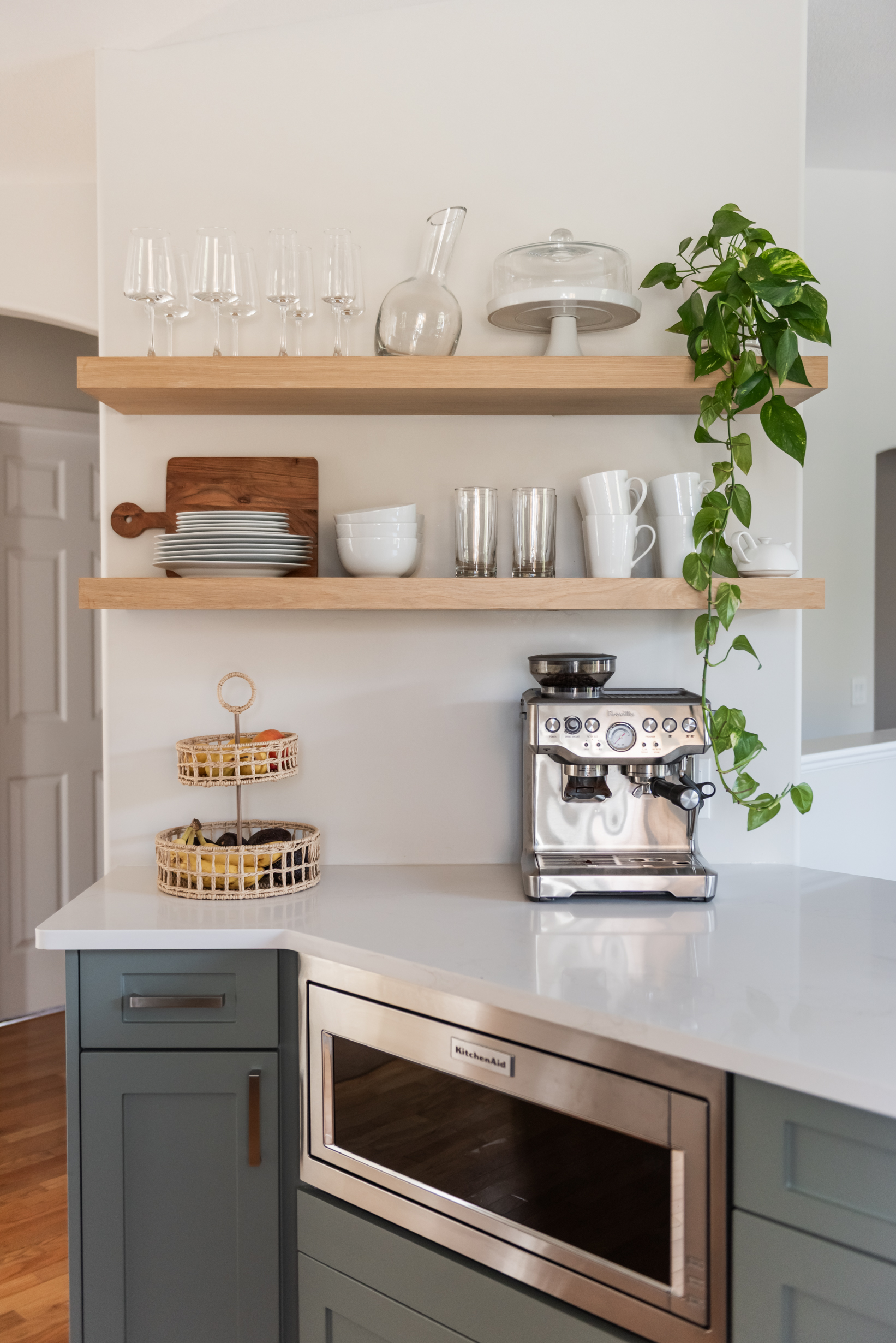
With the wall opened up it gave us the opportunity to add extra backing to custom white oak open shelving which we added to the kitchen. This allowed for the client to store dishes, cookbooks and other heavy items without worrying about weight.
Design tip: Fill in your 90s niches. They rarely add value and often steal it.
AFTER
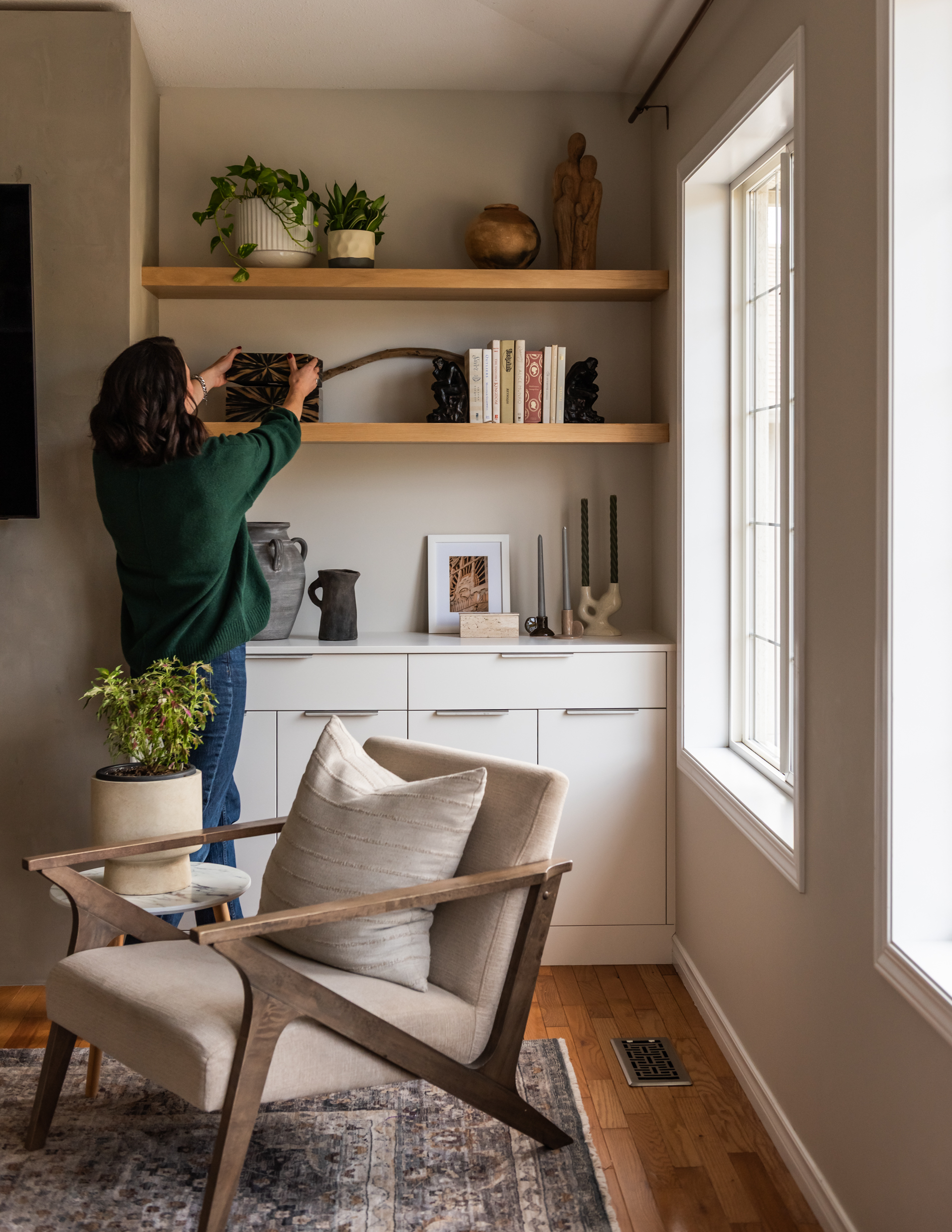
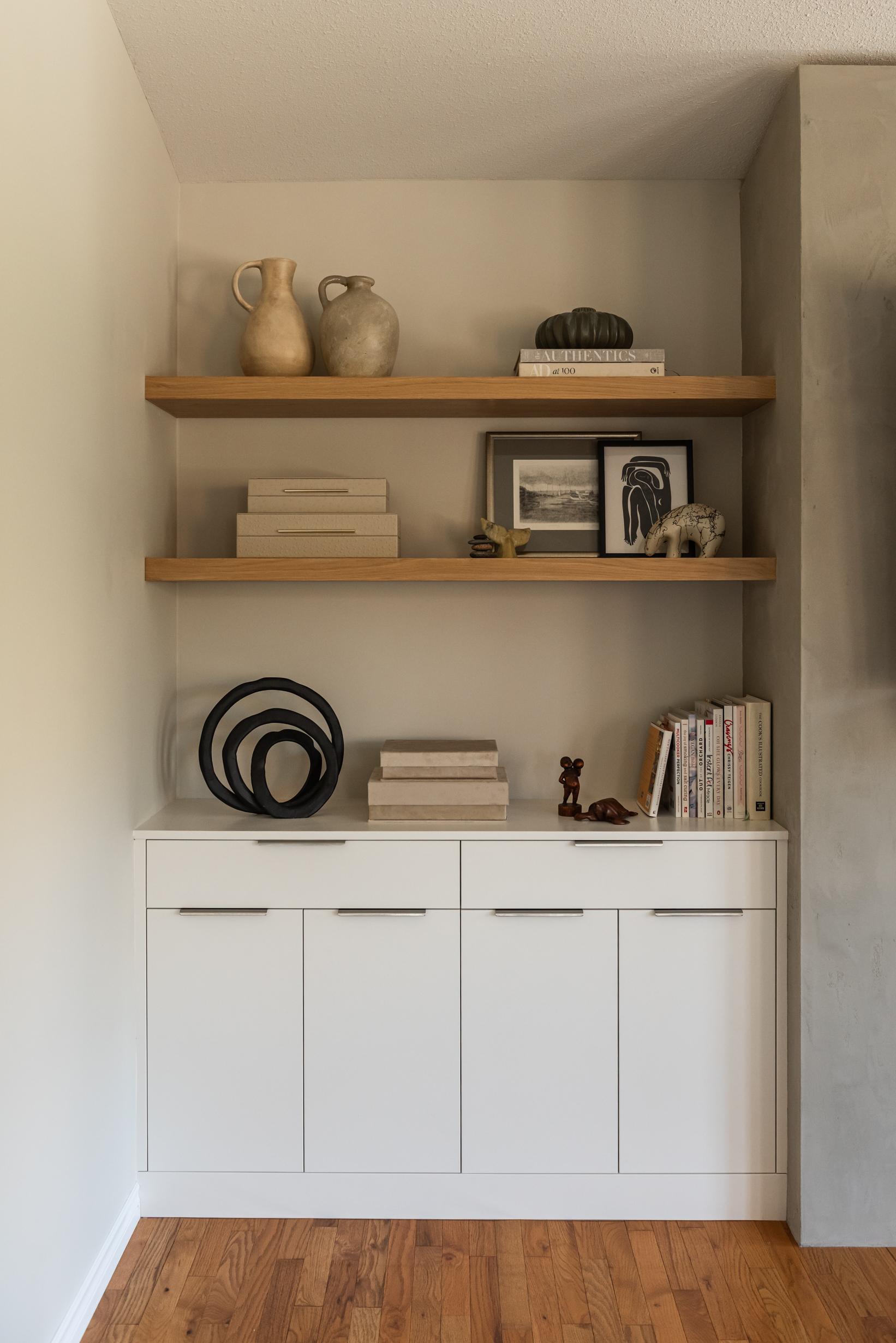
A Living Room Designed to Feel Calmer
The living room transformation centered on restraint and architectural clarity.
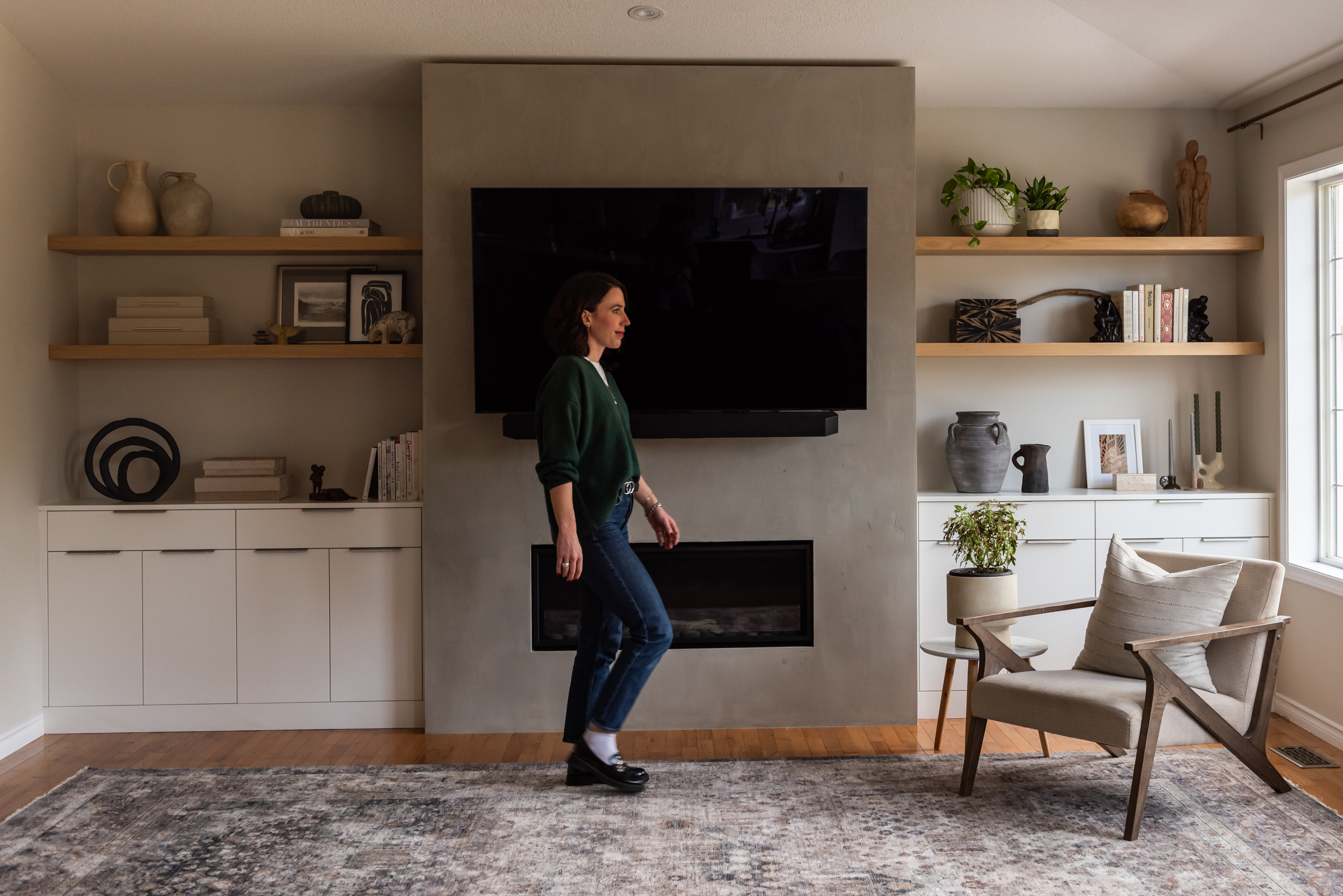
By selecting a zero-clearance fireplace, we were able to eliminate the mantel altogether, creating a clean vertical line that feels modern yet timeless. The surround was hand plastered, introducing texture and softness while maintaining a minimalist aesthetic.
Custom built ins were designed to absorb everyday clutter behind closed cabinetry, while white oak floating shelves were used for decorative moments rather than storage overflow.
Design tip: In family spaces, closed storage does the work, open shelving tells the story.
BEFORE
AFTER
The Primary Ensuite, Editing Over Erasing
Rather than replacing everything, the primary ensuite renovation focused on refinement.
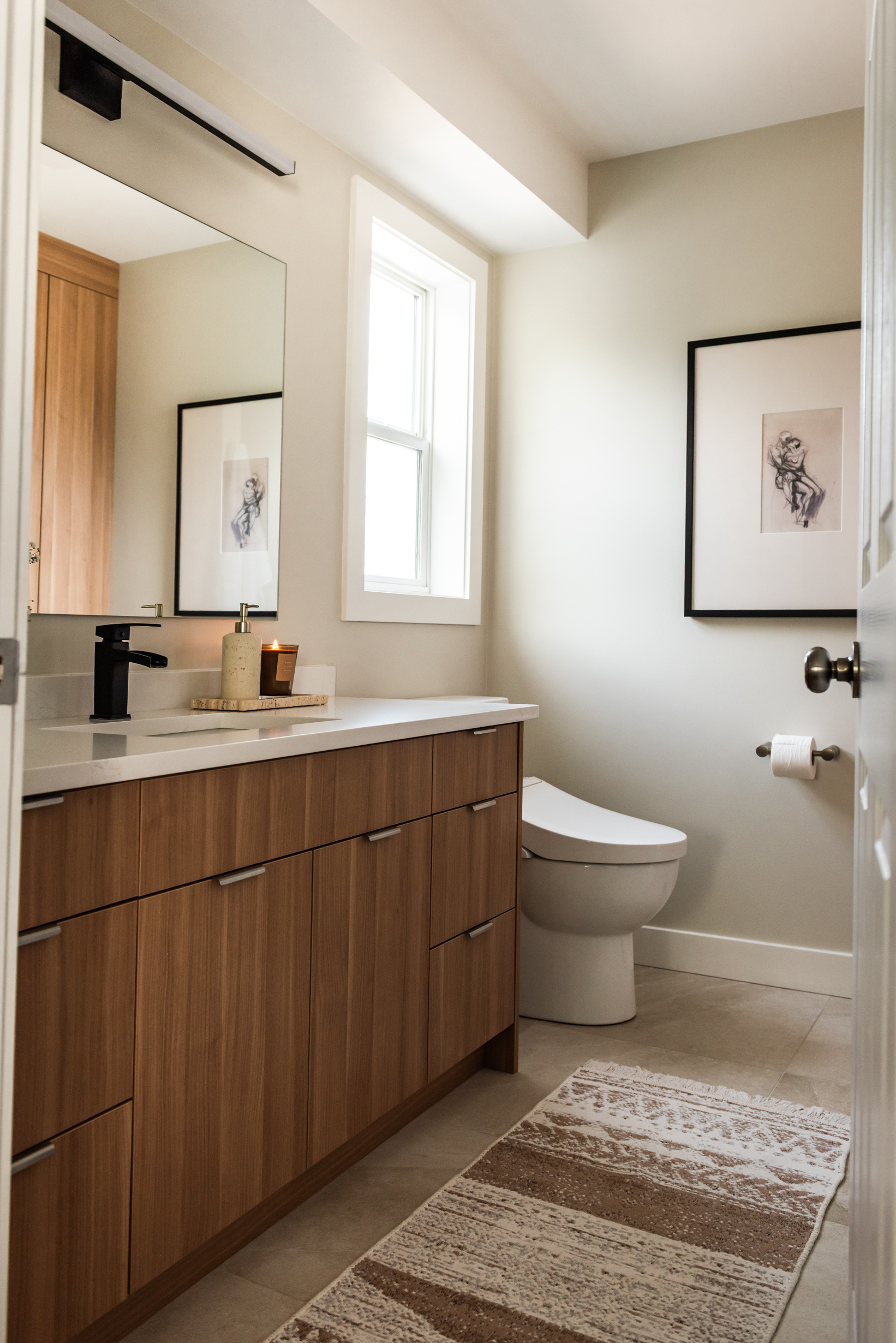
The existing vanity was refaced in warm wood tones, paired with new edge pull hardware, while the original quartz countertop, sink, and faucet were retained. This allowed the investment to shift toward what mattered most.
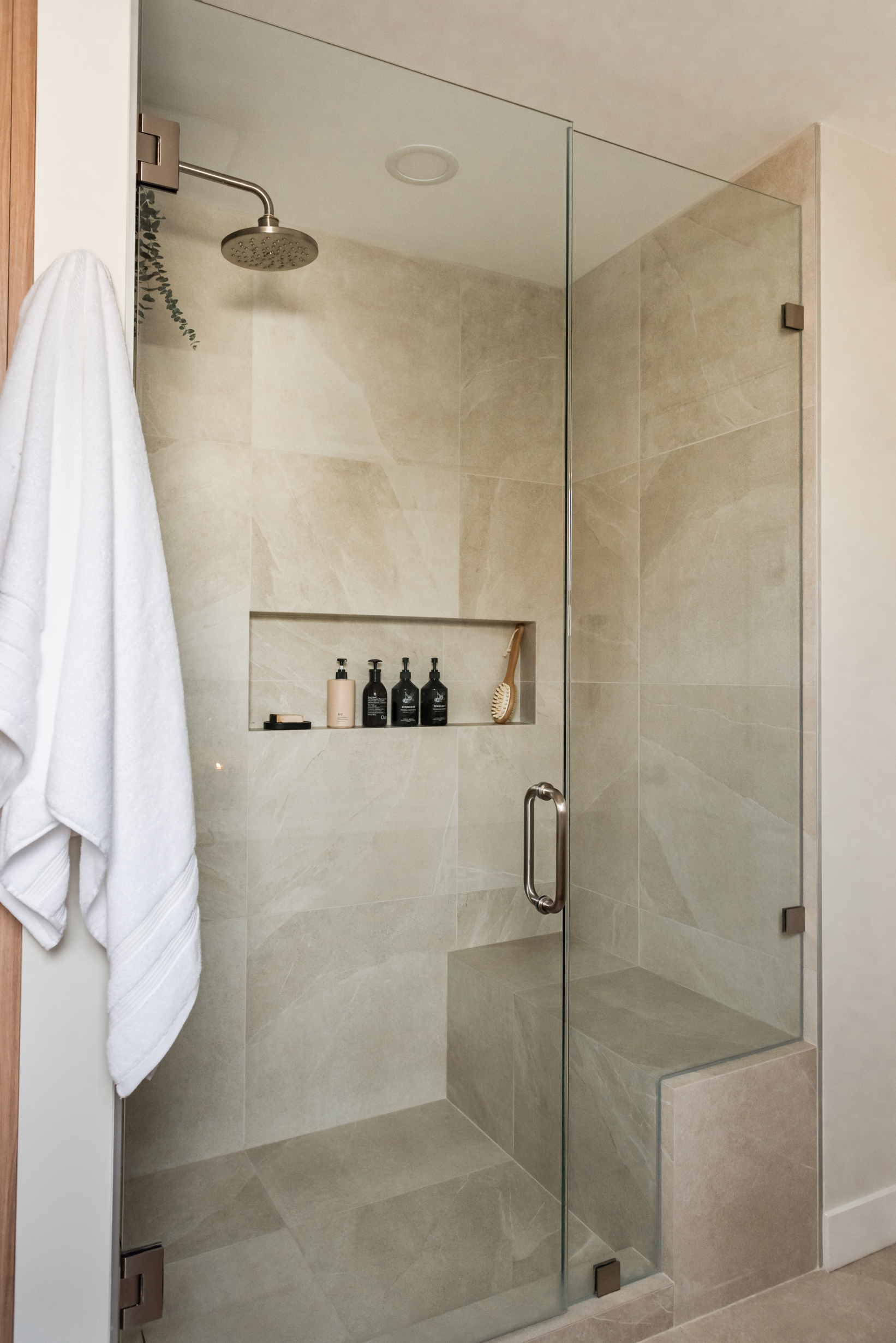
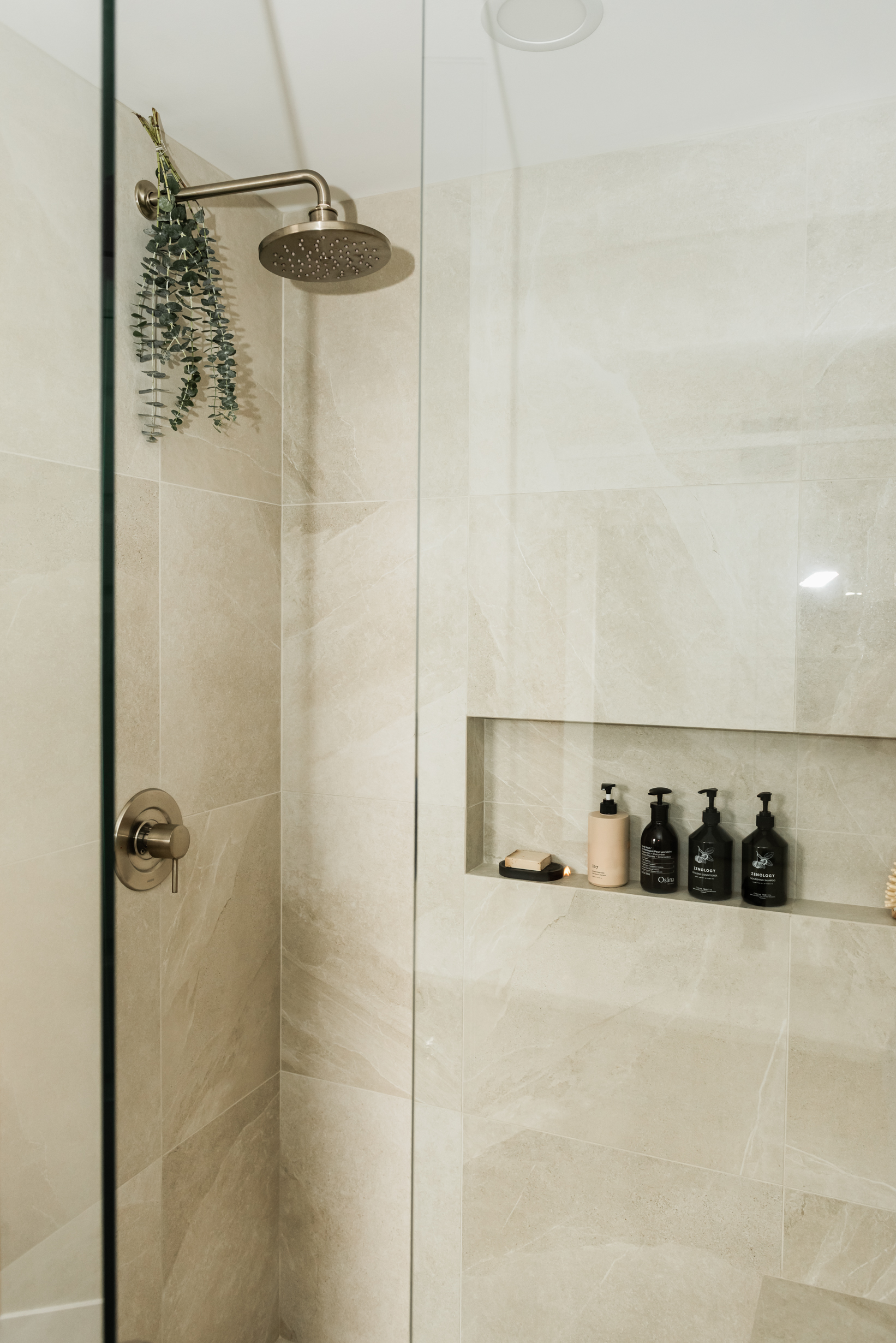
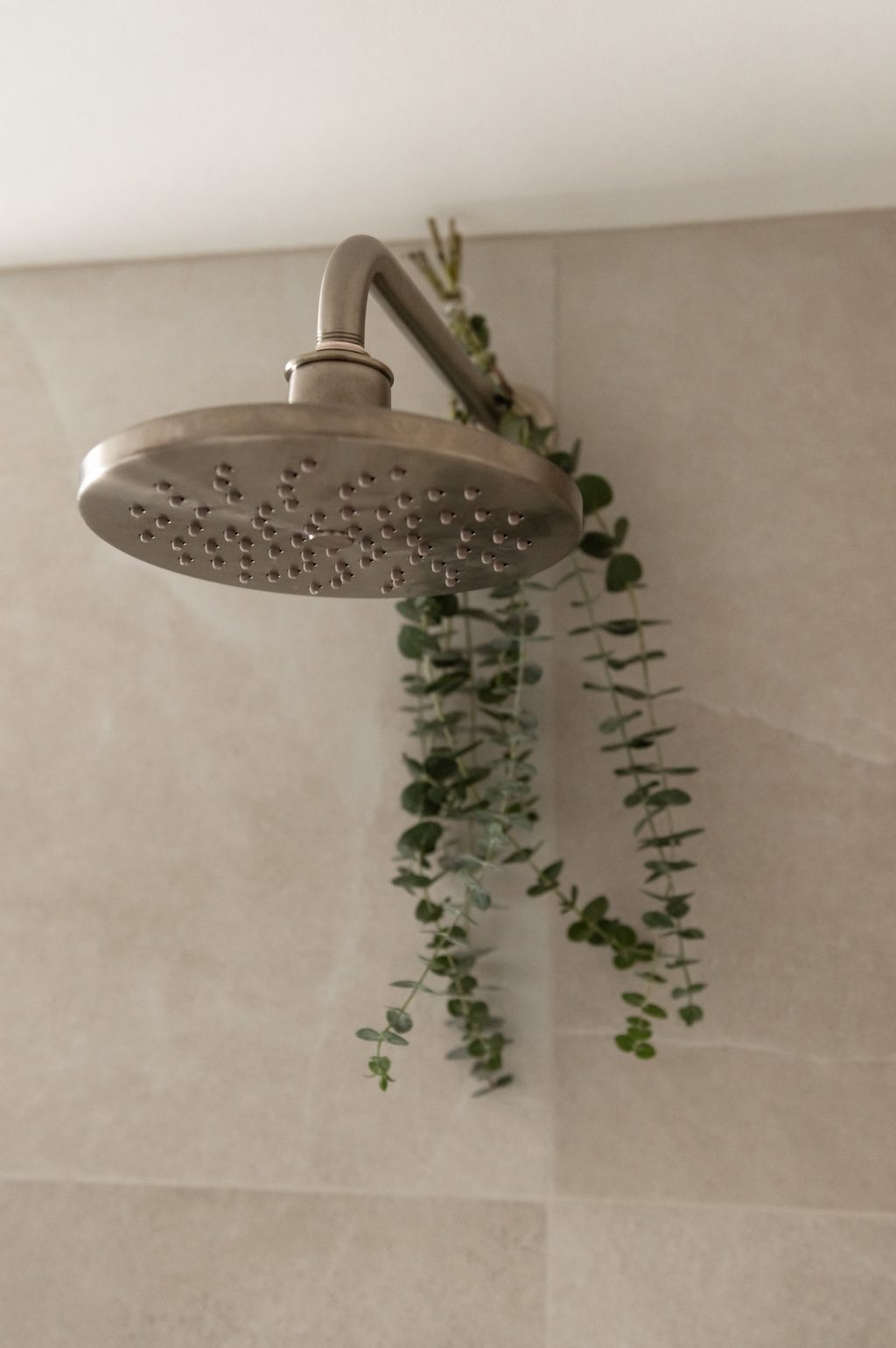
By slightly reducing the width of the linen cabinet, we gained valuable square footage for a larger, more comfortable shower. The custom tiled shower features large format tile, an oversized linear niche, a built in bench, and a rainfall shower head, creating a calm, spa-like experience without unnecessary excess.
Design tip: Before expanding a room, look at what can be edited. Even a few inches can improve functionality.
BEFORE
AFTER
BEFORE
AFTER
BEFORE
AFTER
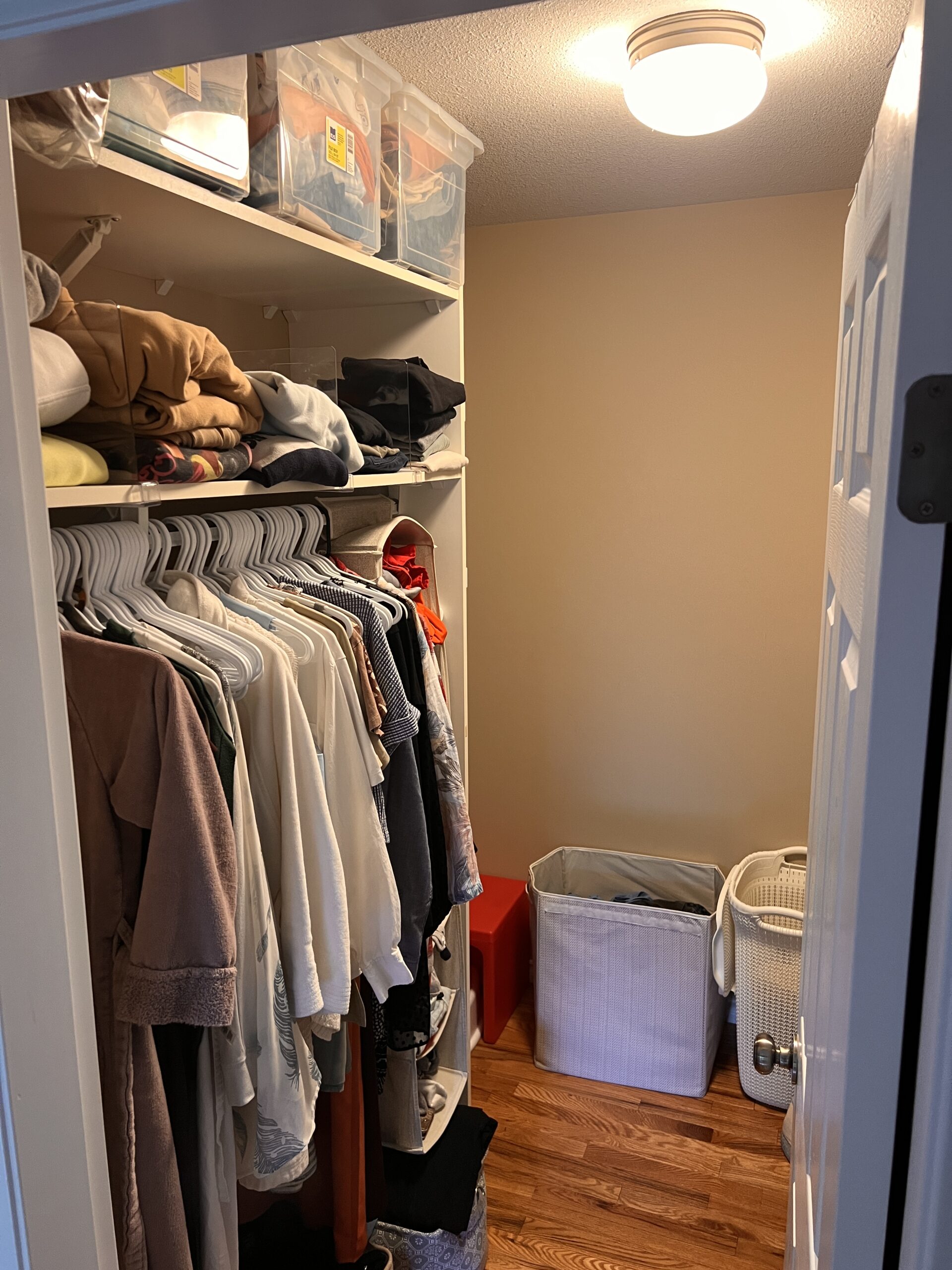
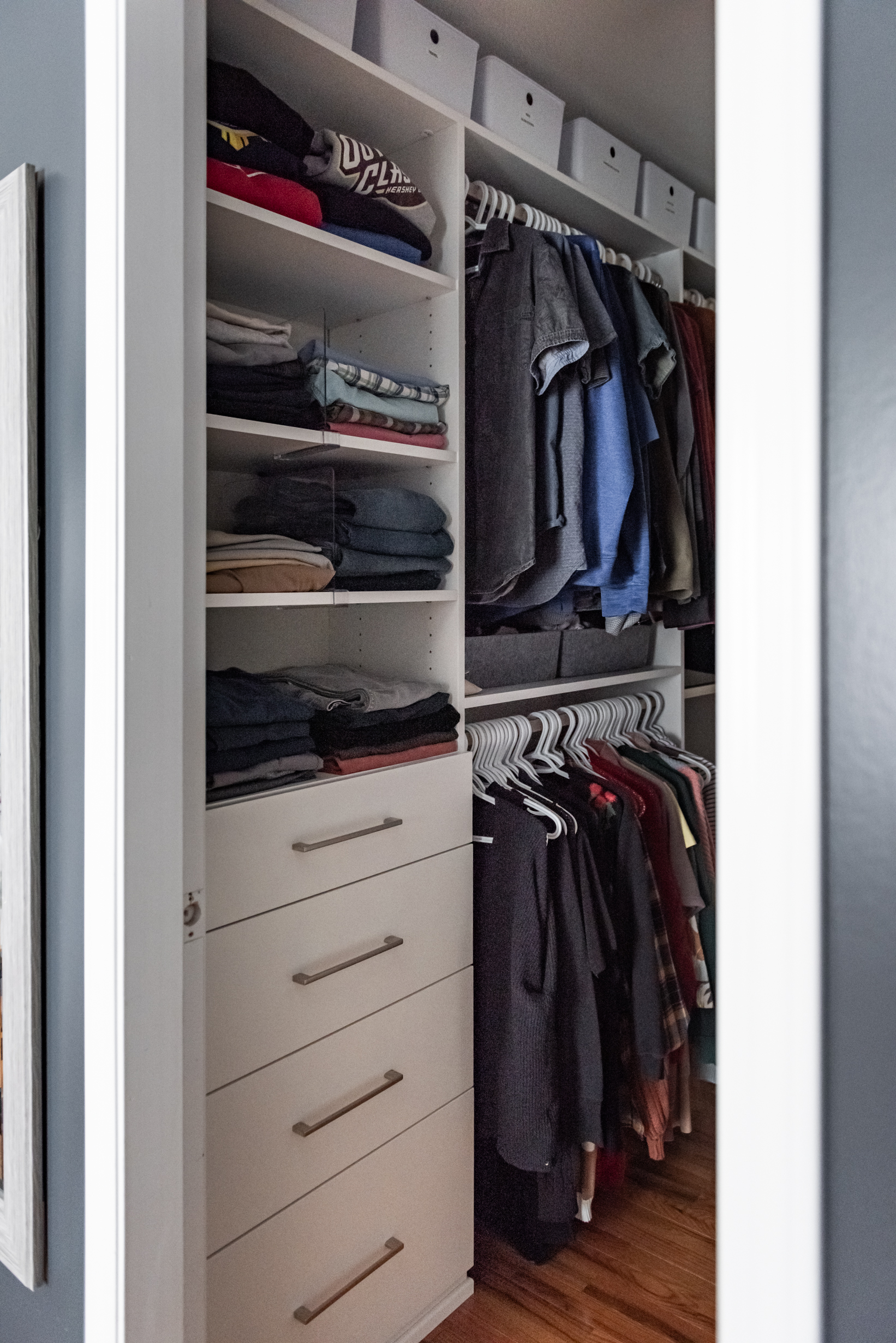
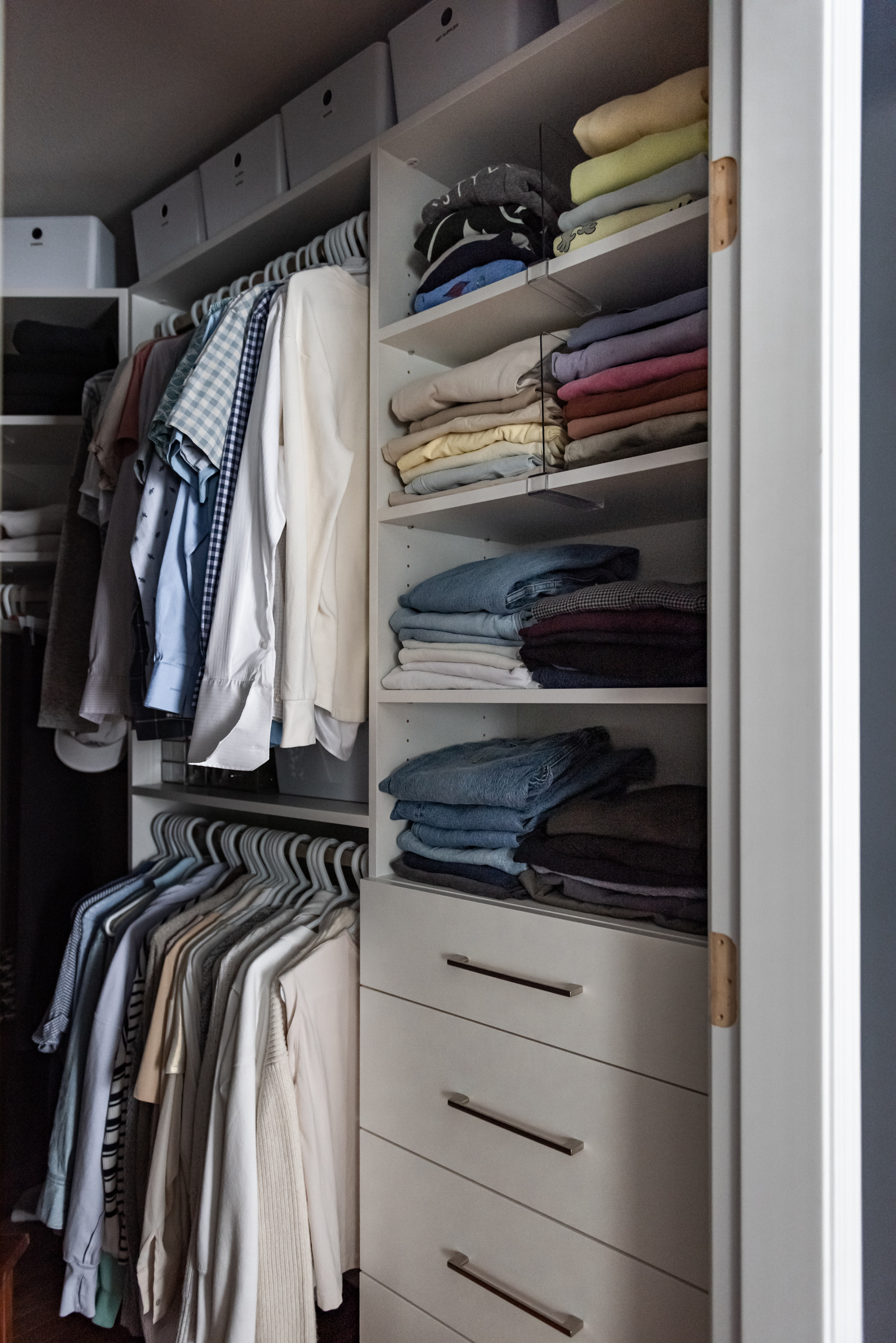
A Walk In Closet That Works Harder
With the ensuite layout adjusted, the shared wall with the walk in closet needed to perform efficiently. A custom closet system was designed to maximize vertical storage and create clearly defined zones.
This is a great example of investing where it counts. A well designed closet, thanks to Jenny and the team at California Closets Kelowna, improves daily routines, reduces visual clutter, and makes small spaces feel larger.
BEFORE
AFTER
The Mud Hall, Where Real Life Happens
Coming in from the garage, the mud hall needed to handle family life with ease.
We designed a custom bench with open cubbies for easy shoe storage, hooks for coats, and a shelf for baskets which store seasonal accessories for each family member. The vertical wood slat wall adds warmth and rhythm, perfectly aligned with the home’s Japandi influence.
Adjacent to this, the original French door coat closet was replaced with a fully built in solution featuring drawers below and shelving above, all finished in matching cabinetry.
Design tip: Entry spaces should feel calm but work hard. If you are constantly fighting clutter, your storage is not doing its job.
BEFORE
AFTER
A Small Laundry Room, Maximized
The laundry room was compact and underperforming, but full of potential.
We introduced drawer risers beneath the washer and dryer to improve ergonomics and add concealed storage. Full depth upper cabinetry maximizes vertical space, while a powered tall cabinet houses a Dyson charging station, one of those small details that makes daily routines smoother.
The existing tile flooring remained, allowing the budget to focus on custom cabinetry wrapped in a warm, earthy wood grain that ties seamlessly into the rest of the home.
Design tip: In small utility spaces, vertical storage and ergonomics matter more than square footage.
BEFORE
AFTER
A Budget Friendly Basement Bathroom Refresh
The basement bathroom received a thoughtful facelift that respected budget constraints without sacrificing impact.
We kept the existing flooring and shower, and replaced the vanity, storage tower, toilet with bidet attachment, mirror, and lighting. Toe kick lighting was added, a game changer in a windowless bathroom.
The key design decision here was color. Wood was ruled out due to the existing shower tile pattern, so we pulled a charcoal green grey tone from the shower tile and paired it with a complementary quartz countertop for a moody, monochromatic result.
Design tip: When working with existing tile, choose cabinetry colors that echo undertones already present rather than competing with them.
BEFORE
AFTER
The Takeaway
Sugi House is proof that a renovation does not need to be loud to be impactful.
By editing rather than erasing, preserving what worked, and investing intentionally, this home now feels calmer, warmer, and far more functional. These are the kinds of changes that age well, support real life, and quietly elevate everyday living.
If you’re planning a renovation and could use expert guidance, explore our Interior Design Consulting Services — or, if you’re looking to partner with a design-build team you can trust, simply fill out our Contact Form or book a Free Discovery Call below to get started.
As always, thank you so much for being here, please share this with a friend who is about to renovate.
Follow along for behind-the-scenes, project progress, and daily inspiration over on Instagram @juxta.interiordesign.
If you enjoyed this project, you may also love these reads:
→ Basement Suite Kitchen Gets a Bright and Timeless Upgrade A thoughtful kitchen refresh focused on clean lines, light finishes, and practical updates that make a compact basement suite feel brighter, more functional, and timeless.