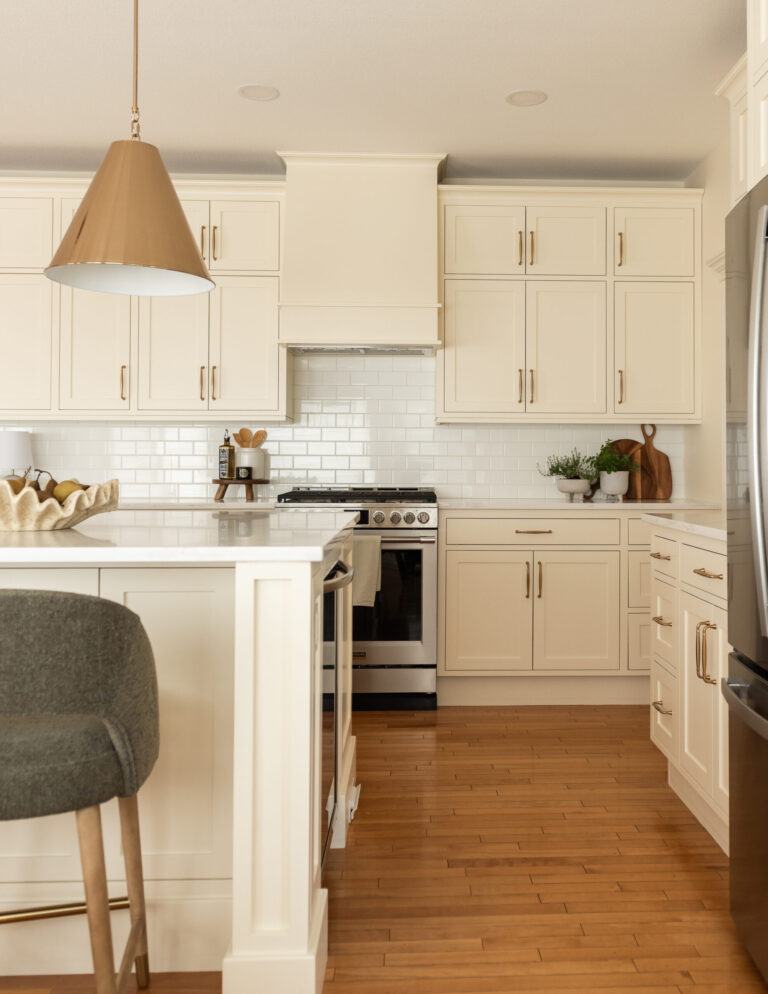

Behind the Build: Do It Right the First Time

There’s a lesson every renovator learns at some point – usually the hard way.
About ten years ago, I (Kellen) was renovating my own 100-year-old home. I had just finished tearing out weeks’ worth of lath and plaster and was exhausted. When I got to the kitchen, there was one small section of wall I really didn’t want to redo. I told myself it would be fine to leave it. My dad looked at me and said, “Just tear it off. You’re going to regret keeping that.”
I didn’t tear it off.
And he was right.
Finishing that space became harder because the foundation of the work wasn’t properly aligned.
That lesson resurfaced on this project. We saved as much of the original framing as we could – and in some ways, that was the right call. Until it came time to hang doors, install baseboards, and trim out every detail.
The walls were twisted.
Corners were out of square.
Framing had shifted over 50 years of settling and drying.
The finishing does look beautiful now – but it took hours and hours of additional precision work to correct what could have been solved in the early stage.
In hindsight, removing more of the original framing and rebuilding those interior walls would have made the entire finishing phase smoother and more efficient.
It’s a reminder I come back to often – doing it right the first time isn’t always faster, but it is almost always easier.
The unseen work determines the seen result.
And the craftsmanship you don’t notice is usually the craftsmanship that matters most.
💬 FAQ: Why the “Unseen” Work Matters in a Renovation
Q: Why does early framing and structural prep affect finishing work later?
A: Trim, doors, cabinetry, tile lines – they all rely on straight, level, and square surfaces to look seamless. If the framing underneath is twisted or uneven, the final finishes will either look imperfect or require hours of extra correction. Good finishing starts long before finishing begins.
Q: Is it always better to replace old framing rather than work with what’s there?
A: Not always – but when framing is bowed, twisted, or has shifted over time, rebuilding can actually save cost and time in the long run. It ensures the finishing phase is cleaner, faster, and more precise. Keeping problematic framing often means paying more later in labour to correct it.
Q: How do you decide what should be kept and what should be replaced?
A: We look at the age, condition, straightness, and alignment of the walls – and also the level of finish the client wants. If the end goal is clean lines, crisp joinery, and seamless trim, then rebuilding imperfect framing early can be the smarter investment.
Q: Does this mean renovation budgets increase when we “do it right the first time”?
A: Sometimes, yes, but it’s much more cost-effective than making corrections at the finishing stage or repairing issues later. Rebuilding early saves time, protects material investments, and results in a more polished final outcome. It’s about spending wisely, not spending more.
Want to read more about this project (and see all the incredible before and afters?) Click here.
More questions? Head to our FAQ page linked here.
Want more like this post? Click on one of the posts below:
→ When Saving Now Costs More Later — why updating systems while walls are open prevents paying twice
→ The All-Important Order of Operations — how sequencing decisions protect both design intent and budget
→ Raising the Standard: Fixing What’s Beneath the Surface — when addressing structure first makes everything else easier (and more beautiful)
Want to get started on your own project? Book a Discovery Call below today.
Still hungry? Here’s more